Forebrain
control of locomotion
Many of
behaviors in humans and animals are expressed as different kinds of locomotion
movements: walking, jogging, dancing, swimming, etc. On the one hand,
locomotion is a highly automatic movement. The neural mechanisms, which
determine the order of muscular contractions and the coordination of limb
movements during locomotion resides in the spinal cord. On the other hand, the
spinal mechanism lacks the distant information about the outside world and the
information about the purpose of locomotion. However, the basic pattern of
locomotion may have numerous volitional variations, which allow for adaptations
to the peculiarities of the environment and to the changing needs of a subject.
This is possible due to the involvement of the higher brain motor centers. For
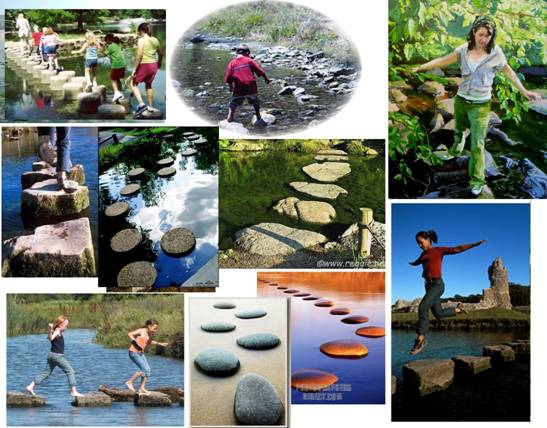
example, when walking in natural habitats, humans and animals must control the
transfer and placement of their feet precisely in order to avoid obstacles and
irregularities. It is the activity of supraspinal,
higher brain centers that modifies locomotion based on visual information.
The overall
aim of this project of Dr. Beloozerova is to understand the
neuronal mechanisms of the forebrain that are involved in adaptation of
locomotion to the visually perceived features of the environment.
In our experiments, we test subjects
during simple over-ground walking on an even surface when locomotion can
proceed successfully even in dark or with closed eyes and during walking along
a horizontal ladder where vision is required for an accurate foot placement on
the cross-pieces. We record kinematics and dynamic parameters of limbs, head,
and body movements, the activity of limb muscles, and the neuronal activity of
motor and parietal cortices, and motor thalamus. We then compare body
mechanics, the activity of muscles, and the activity of brain
areas in these two tasks and reveal the parameters, which are associated
specifically with stepping under visual control.
In the
analysis of biomechanics of complex locomotion behaviors we collaborate with
the laboratory
of Dr. Prilutsky at the Georgia Institute of
Technology, Atlanta, GA. Together we conduct experiments in Phoenix during
which we record whole-body kinematics and dynamics of subjects while they walk
along a cluttered pathway, along series of elevated platforms, or along a
narrow strip. We also record the activity of the motor region of the cerebral
cortex the same time. Some of these measurements are then repeated in
Brad Farrell from the Georgia Institute of
Technology has actively participated in these studies for about 2.5 years since
he was an undergraduate student. In the fall of 2006, Brad has started his
graduate studies in the PhD program of the
Our studies of the forebrain control of
locomotion lead to a better understanding of neuronal mechanisms of the
forebrain for control of visually guided locomotion. The results may have significant
clinical applications. In forebrain stroke patients, selection of
rehabilitation strategies for locomotion deficits depends largely on
understanding the role of direct forebrain control of locomotion in relation to
spinal mechanisms.
See our
free to download
publications on this topic
See
all our publications on
this topic
Explore
literature on
control
of locomotion at PubMed  Home
Home